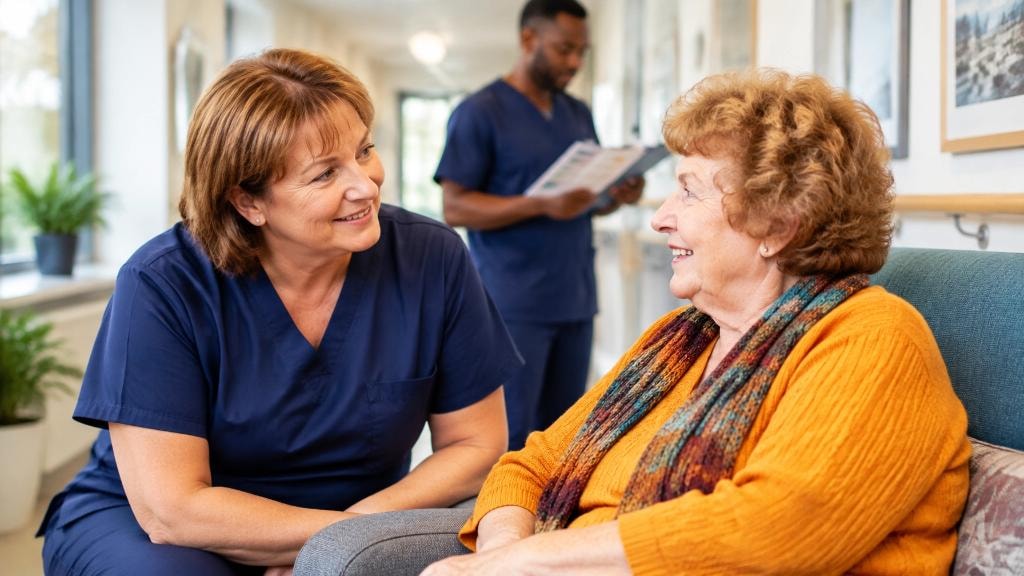
Falls are among the most frequent and costly incidents managed by adult social care providers. Although a fall may initially appear to be an isolated event, its consequences can be substantial — including fractures, emergency hospital admission, reduced mobility, loss of confidence, diminished independence and increased long-term care needs.
NICE guidance cites approximately 210,000 emergency hospital admissions each year in England among people aged 65 and over (2022/23 data). The consequences are particularly serious after a hip fracture, which can significantly affect a person's physical function, psychological wellbeing and ability to remain independent.
For this reason, falls prevention should be regarded as more than a general health topic. It is a training, safeguarding, quality-improvement and compliance priority for care homes, domiciliary care agencies and supported-living providers.
NICE guideline NG249, published on 29 April 2025 and replacing CG161, recommends a structured and multifactorial approach to falls assessment and prevention. Frontline staff therefore require the knowledge and practical competence to identify risk, support safe mobility, respond appropriately after an incident and preserve the person's dignity throughout the process.
Understanding Falls Risk
Common risk factors
Falls rarely result from a single factor. A person's risk typically increases when several physical, clinical, environmental and psychological factors occur simultaneously. Common risk factors include:
- •Age, frailty and reduced muscle strength
- •Poor mobility, balance or gait
- •Previous falls or a fear of falling
- •Medication, particularly sedatives, antihypertensives and medicines associated with drowsiness or dizziness
- •Polypharmacy and recent medication changes
- •Poor vision or difficulty judging depth and obstacles
- •Foot pain, foot deformities or unsuitable footwear
- •Dehydration, low blood pressure or acute illness
- •Cognitive impairment and dementia
- •Environmental hazards, including poor lighting, clutter, loose rugs and uneven flooring
- •Inappropriate clothing, such as trailing trousers or poorly fitted garments
- •Unsafe use of mobility aids or transfer equipment
A previous fall can also create a cycle of fear and inactivity. When a person becomes anxious about walking, they may reduce their activity, lose strength and become less confident — which can increase rather than reduce their future risk.
The importance of individual assessment
NICE advises against relying solely on generic falls prediction tools. Instead, staff should contribute to a structured assessment of the person's individual circumstances, including their mobility, medication, vision, footwear, continence, cognition and living environment.
Care staff may not undertake clinical assessments outside their role, but they are often best placed to notice gradual changes. A new difficulty standing, increased unsteadiness, repeated near-misses, unusual drowsiness or reluctance to walk should be recorded and escalated in accordance with the provider's procedures.
Training Priorities for Care Staff
Recognising and reducing risk
Effective falls prevention training should enable staff to recognise both obvious and less visible hazards. It should explain how physical health, medication, hydration, dementia, environmental design and emotional wellbeing can interact.
Training should also clarify the difference between reasonable risk management and unnecessary restriction. The objective is not to prevent every movement, but to help the person remain as mobile and independent as possible while appropriate safeguards are in place.
Strength, balance and safe mobility
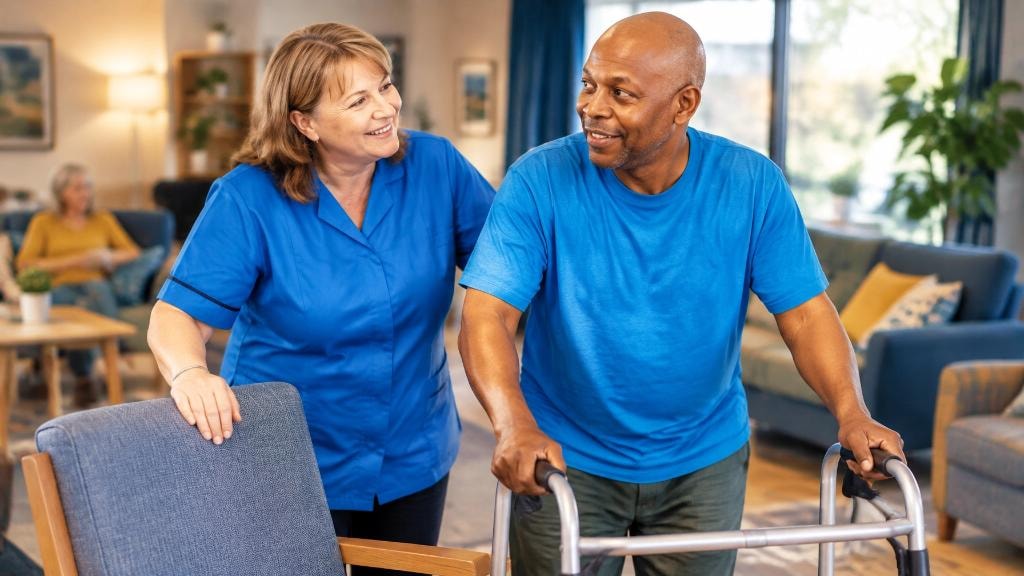
Care staff should understand the importance of maintaining activity, strength and balance, particularly where a person has become sedentary following a fall. Staff may support participation in an exercise or rehabilitation programme, but activities must be appropriate to the person's assessed needs and delivered within the worker's competence.
Practical training should cover:
- •Supporting safe walking and repositioning
- •Checking that mobility aids are available, suitable and used correctly
- •Encouraging movement without rushing or unnecessarily taking over
- •Recognising fatigue, dizziness, pain or changes in gait
- •Using agreed transfer techniques
- •Communicating clearly before and during movement
- •Maintaining privacy, dignity and consent
Moving and handling equipment
Falls prevention is closely connected to safe moving and handling. Staff should receive practical instruction in the correct use of hoists, slings, slide sheets, transfer boards, standing aids and other equipment relevant to their workplace. Equipment must be used in line with the manufacturer's instructions and the provider's local policy, and hoists and slings should only be used by staff who have been trained and assessed as competent for that specific equipment.
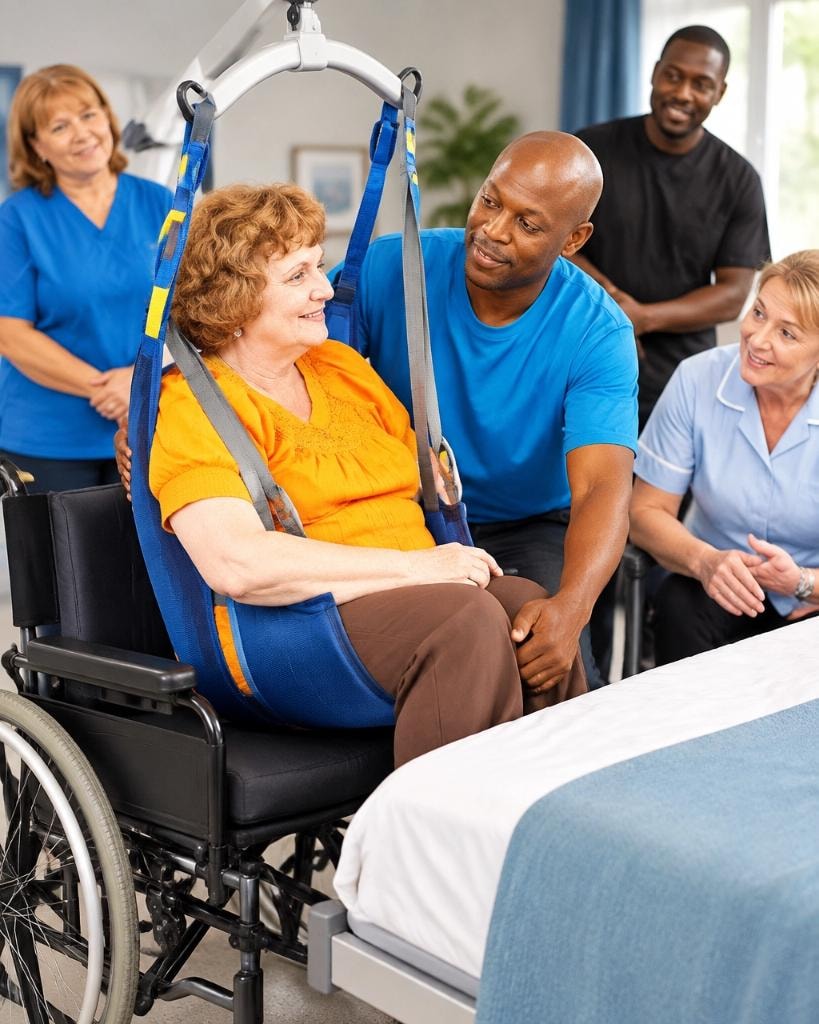
Training should address:
- •Person-specific moving and handling plans
- •Dynamic risk assessment before each task
- •Equipment checks and reporting defects
- •Correct sling selection and attachment
- •Staffing requirements for complex transfers
- •The limits of the worker's competence and when to stop and seek assistance
The Health and Safety Executive's guidance on moving and handling in health and social care emphasises risk assessment, suitable equipment, safe systems of work and appropriate staff training. Safe transfers depend on the individual's moving and handling plan, the specific equipment in use and trained staff following agreed procedures.
Environmental and Organisational Prevention
Safer care environments
A well-designed environment can reduce avoidable hazards without making the setting institutional or restrictive. Care teams should routinely review:
- •Lighting in bedrooms, corridors, bathrooms, entrances and stairways
- •Flooring, rugs and thresholds
- •Clutter, trailing cables and poorly positioned furniture
- •Bed and chair height
- •Access to grab rails and stable handholds
- •Call bells and personal alarms
- •Bathroom safety and access to continence facilities
- •Appropriate storage of equipment
- •Footwear and clothing
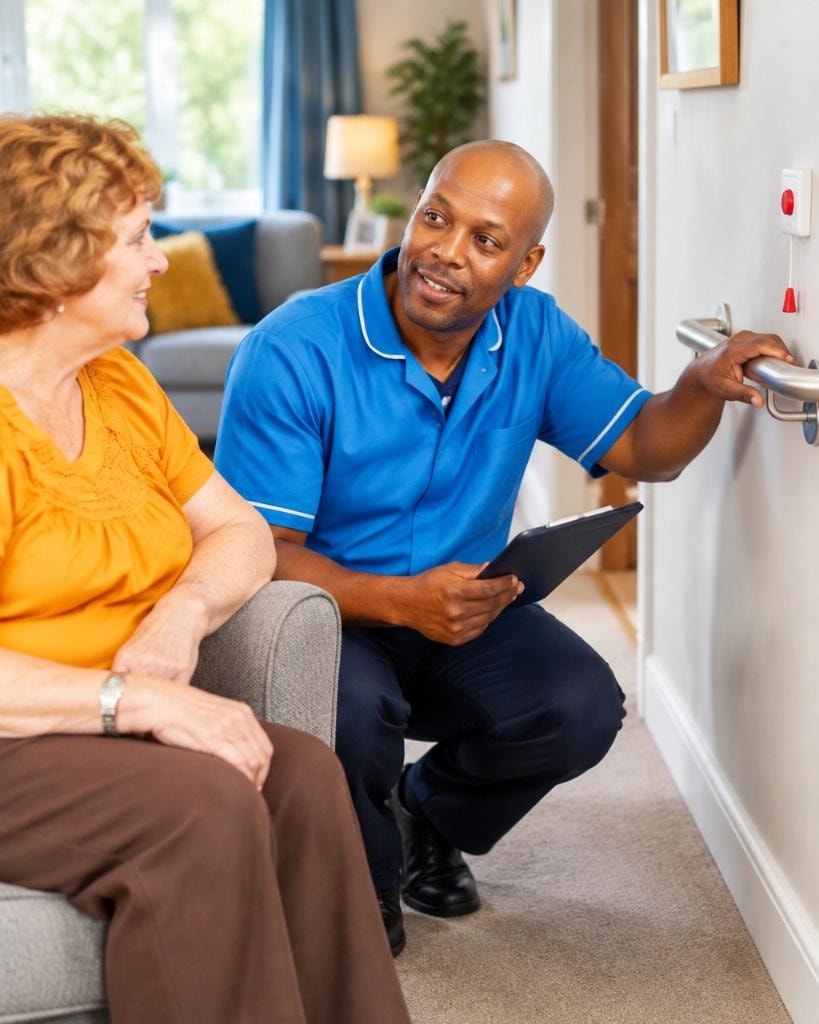
For domiciliary providers, environmental checks should be incorporated into care planning and review processes. Staff should report hazards that cannot be resolved immediately and should not assume that a risk is acceptable simply because it has been present for a long period.
Medication, vision and clinical referral
Care workers should not alter medication, but they should recognise and report possible medication-related concerns — such as new drowsiness, dizziness, confusion or unsteadiness — through the agreed pathway.
Providers should also support access to:
- •Medication reviews
- •Eye examinations and vision services
- •Podiatry where foot problems affect mobility
- •Occupational therapy assessments
- •Physiotherapy or community falls prevention services
- •Hydration and nutrition support
- •Specialist dementia or mental health advice where appropriate
NICE's quality standard on falls, updated on 29 April 2025, supports a coordinated approach involving health and social care professionals rather than treating falls as the responsibility of one worker or department.
Responding After a Fall
Immediate response
Every provider should have a clear post-fall procedure that staff understand before an incident occurs. In general, staff should:
- •Stay calm, reassure the person and maintain privacy
- •Check responsiveness and look for signs of immediate distress or injury
- •Avoid moving the person unnecessarily, particularly where serious injury is suspected
- •Follow local escalation procedures and seek urgent medical assistance when required
- •Use appropriate equipment and trained staff if the person is assessed as safe to move
- •Continue observation and communicate relevant changes to the senior person or clinician
- •Record and report the incident in line with organisational policy
Urgent escalation may be required where there is suspected fracture, severe pain, loss of consciousness, breathing difficulty, significant bleeding, a head injury, new confusion or an inability to move safely. Staff should follow local clinical guidance and emergency procedures rather than relying on informal judgement.
Recording, reporting and learning
Accurate records should include what happened before the fall, the person's position, environmental conditions, footwear, mobility aid use, observed injury, action taken and who was notified. Near-misses and unplanned lowerings should also be considered within the provider's reporting framework.
Incident data should be analysed for patterns, including:
- •Repeated falls at particular times of day
- •Falls during particular transfers
- •Common environmental hazards
- •Links with medication changes
- •Staffing, handover or equipment issues
- •Increased risk following illness or hospital discharge
The purpose of reporting is not to allocate blame. It is to identify system improvements and reduce the likelihood of recurrence.
Dignity, Consent and Independence
Avoiding unnecessary restriction
A safety intervention can become harmful if it removes a person's freedom without proper consideration. Restricting access to walking, applying bed rails automatically, preventing a person from choosing where to sit or insisting on constant supervision may reduce one perceived risk while increasing distress, deconditioning and loss of independence.
The Mental Capacity Act Code of Practice requires decision-makers to begin with the presumption that a person has capacity and to support them to make their own decisions wherever possible. Capacity is decision-specific: a person may have capacity for one decision and not for another.
Where a person lacks capacity for a specific decision, any action must be in their best interests and represent the least restrictive option available. Staff should consider the person's wishes, communication needs, known preferences and individual history, while following organisational policy and seeking appropriate professional advice before any decision is taken on the person's behalf.
Person-centred risk management
Good falls prevention does not aim to eliminate every element of risk. Instead, it balances safety with autonomy through informed, proportionate and regularly reviewed support.
Staff should explain interventions clearly, seek consent, offer choices and involve families or advocates where appropriate. A person may reasonably choose to walk with supervision, use a particular chair or continue an activity that involves some risk. The care plan should reflect how that decision will be supported safely.
Manager's Falls Prevention Checklist
Managers should periodically review the strength of their falls prevention arrangements by confirming that:
- •Moving and handling training is current for every relevant staff member
- •Staff can demonstrate competence with hoists, slings and other equipment
- •Individual falls risk assessments are completed and reviewed after any material change
- •Near-misses and unplanned lowerings are recorded and analysed
- •All staff understand the post-fall procedure and escalation process
- •Staff are confident to report hazards, incidents and near-misses without fear of blame
- •Lighting, flooring, clutter, call bells and grab rails are reviewed regularly
- •There is a clear pathway for medication concerns to reach a GP or pharmacist
- •Staff can access community falls prevention, physiotherapy or occupational therapy services
- •People are actively supported to maintain strength, balance and independence
- •Restrictive practices are avoided unless lawful, necessary and proportionate
- •Incident data is reviewed for patterns and converted into practical action
- •Learning points are communicated through supervision, handovers and team meetings
How XcENTRIK Solutions Supports Care Teams
Falls prevention requires more than a single awareness session. It depends on competent staff, consistent procedures, accurate reporting and a workplace culture that values both safety and independence.
XcENTRIK Solutions provides accredited health and social care training covering safe moving and handling, health and safety, safeguarding adults, medication awareness and dementia awareness. Our learning offer includes NCFE CACHE-accredited qualifications, CPD Approved Provider status and PQS SSIP Health and Safety accreditation.
Training can be delivered through on-site group sessions and tailored staff development plans, enabling employers to connect learning with the specific requirements of their care home, domiciliary service or supported-living provision. This practical approach supports workforce capability while helping managers evidence investment in safer, person-centred care.
Our wider social-impact mission is to support learners from vulnerable and disadvantaged backgrounds by improving access to skills, confidence and meaningful employment opportunities.
To discuss health and social care training for your organisation, [contact us](/contact) or explore our [health and social care training programmes](/health-and-social-care).
Conclusion
Falls prevention is a shared responsibility across adult social care, requiring coordinated attention to mobility, medication, vision, footwear, hydration, cognition, equipment and environmental design. Training gives staff the practical knowledge to recognise risk, respond appropriately and support people without unnecessarily restricting their choices.
For managers, the priority is to establish a continuous improvement cycle: train staff, assess individual needs, record incidents, analyse patterns, review procedures and act on learning. When this process is embedded within a person-centred culture, falls prevention becomes not only a compliance requirement but also a means of protecting dignity, independence and quality of life.
Sources and Further Guidance
- •NICE: Falls, assessment and prevention in older people and people aged 50 and over at higher risk (NG249)
- •NICE Quality Standard QS86: Falls
- •Health and Safety Executive: Moving and handling in health and social care
- •Skills for Care: Statutory and mandatory training
- •Skills for Care: Care Certificate standards